Click to access July newsletter
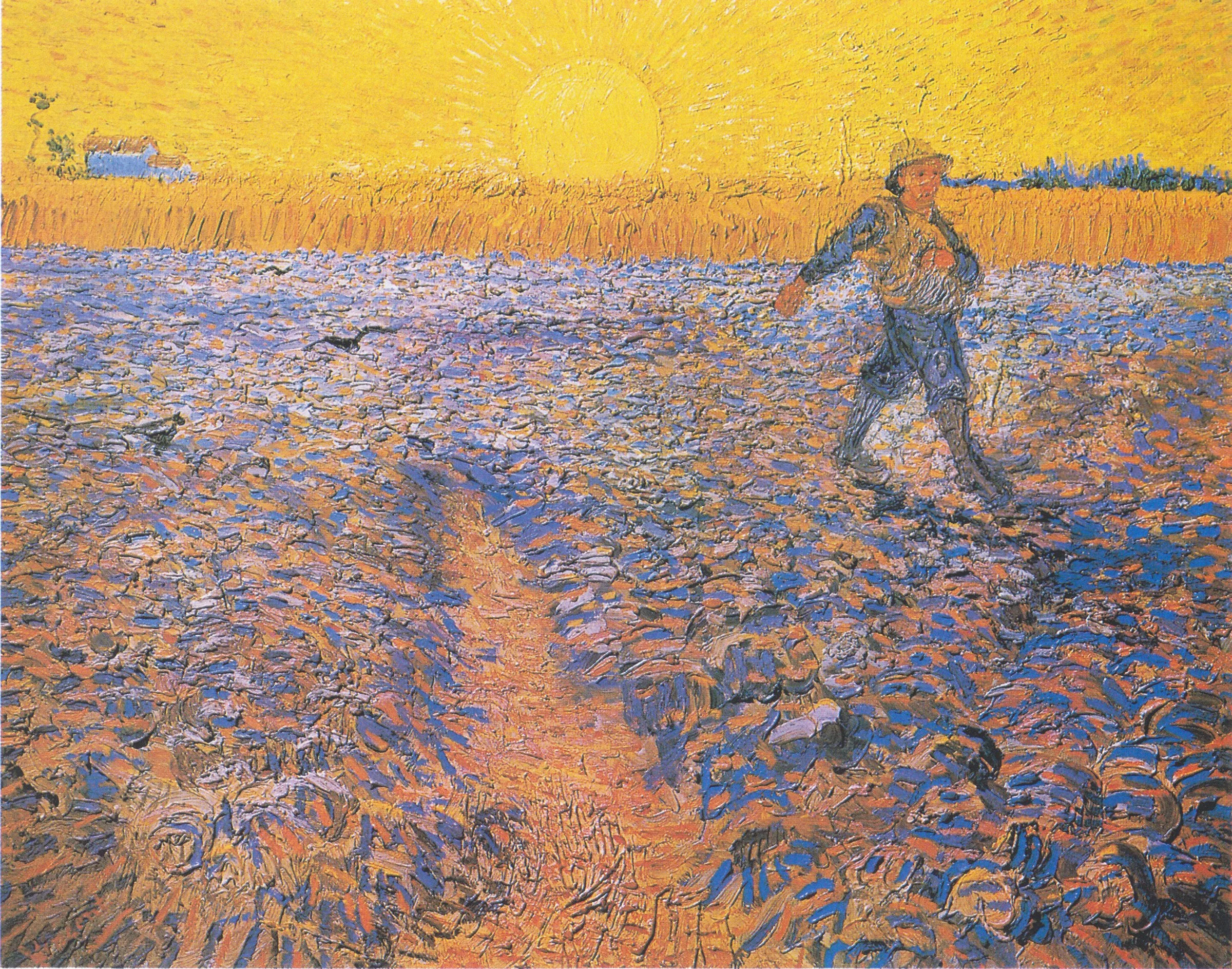
(Art from Vangogh’s ”Sower at Sunset”)
Dear Church,
Most of the Sundays in July we will marinate in Jesus’ parables. If you are familiar with the gospels, you’ll be familiar with this practice Jesus has of telling stories to ignite the imagination of those willing to pause and listen. These stories don’t just tell an interesting narrative, but invite anyone who hears to really pay attention. They call us into introspection - space to explore what the story tells us about ourselves, and what it may be asking of us. They also call us to expand our preconceived ideas of what God is like. Unlike a fable which intends to express a distinct moral lesson, parables challenge us through simple stories to think about important matters - our relationships with others, our place in the world, and how we can be better people. We can return to them time and again and find something new, because of how our life has changed since the last time we read it, and how God is on the move.
I absolutely love that Jesus tells stories, and how they are useful in this way - to push us and pull us, to reconsider our conclusions, and expand our imagination. In many ways the stories throughout scripture are similar - they aren’t so much for clear moral directives, to examine heroes and villains, or to determine who is in or out. We explore them to find where we find resonance with the story, what we might learn about God, and what truth may be needed for us today. Faith with God isn’t a static learned-it-let’s-move-on journey, it is dynamic and asks us to stay in step with the movement of the Holy Spirit.
A couple of these parables touch on the Kingdom of God. Theologian N.T. Wright calls these teachings ‘punchy and pointed’, going on to say, “They were explanations for actions, invitations to new perspectives, and even weapons of political discourse designed to shock as much as to inform.” On the surface we may engage with these parables as inspirational and personally edifying, but they are also meant to influence our engagement beyond our personal salvation and into the work of God’s infiltrating action of the Holy Spirit throughout our communities. The language of ‘kingdom’, while sounding fairytale to us now, pushed against the language of its day, with Rome and empire - a mentality focused on domination. Jesus, using kingdom language, flipped the interpretation of that word on its head - instead of domination, it was about humility and service. Instead of war and retribution it was about restorative justice and equality. It was still about power, but in a way that transformed through inspiration and hope, not through control and fear. Jesus used parables alongside his radical action in the community, to propose a different way of doing things - God’s way wasn’t something that any empire could contain or wield, but is about walking in step with the Spirit so that all may know the freedom and flourishing only God can provide.
May we be people who strive for this kind of discernment, who participate in God’s Kingdom of freedom and flourishing for all. May God’s Spirit guide you and your convictions - in your politics, in your neighborhood, in your understanding of belovedness engraved on every human heart including your own.
Blessings,
Pastor Becca